Mutual Aid Means We Take Care of Each Other
There is a tendency to reduce mutual aid to food drives, free clothes, community refrigerators, or somebody passing out bottled water at a protest. All of that can absolutely be mutual aid. But if that is as far as we take it, we are missing most of the point.

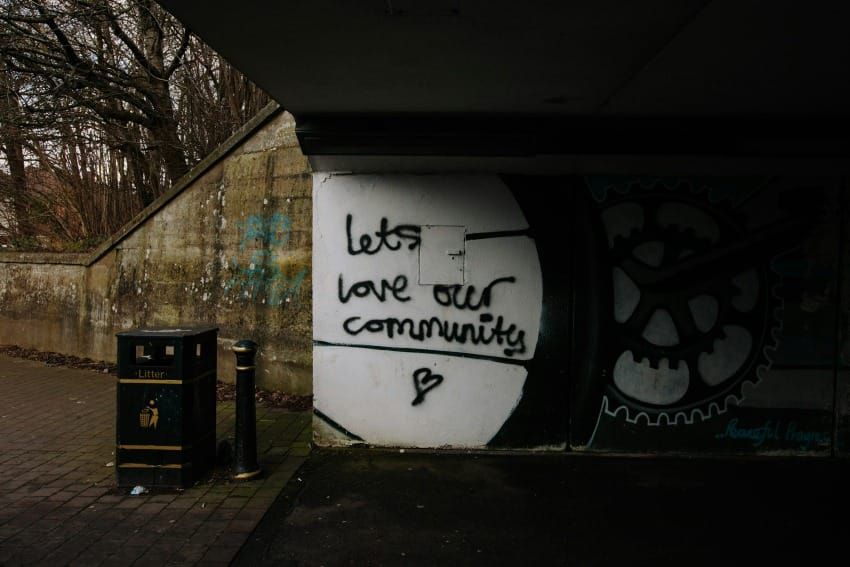
Mutual aid is people building the ability to take care of each other without waiting for somebody in authority to decide whether we qualify for help. Sometimes that means groceries, rent, Narcan, transportation, childcare, a ride home from jail, a place to stay, somebody sitting beside you in court, or helping somebody coming home from prison navigate a world that changed while they were gone.
And sometimes it means protecting each other.
I do not see some sharp dividing line between mutual aid and community defense. Safety is a need just like food, housing, healthcare, and transportation. If somebody is being targeted, harassed, threatened, arrested, deported, abused, or abandoned by systems that claim to protect them, standing beside them is part of taking care of each other too.
Mutual aid without some concept of community defense is incomplete.
That does not mean everybody needs a rifle. It means communities need the ability to care for themselves, protect themselves, and refuse to leave people standing alone when things go bad.
Mutual Aid Is Not Charity
I am not interested in getting into some purity contest over charity. Hungry is hungry. If somebody needs a sandwich, give them the damn sandwich.
But mutual aid goes further.
Charity usually assumes somebody has something and somebody else needs it. One side gives. The other receives. Mutual aid tries to flatten that relationship.
Today you may need help. Tomorrow I may need help. Maybe you have money and I have a truck. Maybe I have food and you know how to fix plumbing. Maybe neither of us has much money, but one of us knows everybody in the neighborhood and can get people together when something goes wrong.
Communities already contain enormous amounts of skill, knowledge, labor, relationships, and resources. Most of the time those things are scattered around and treated like private property instead of collective capacity. We are taught to admire self-sufficiency even though almost nobody is actually self-sufficient.
Nobody survives alone.
Wealth just makes dependence easier to hide. Mutual aid makes that dependence visible and turns it into something intentional. We already need each other. We might as well build around that truth.
When the System Does Not Come
People who have spent much time around homelessness, incarceration, addiction, immigration, poverty, disability, violence, or disaster already know that institutions fail.
Sometimes they lack resources. Sometimes bureaucracy makes the obvious nearly impossible. Sometimes the institution was never designed around the people standing in front of it. And sometimes the institution itself is causing the harm.
I have watched people wait months for services they needed yesterday. I have seen people released from incarceration with paperwork, instructions, and almost nothing else, then somehow expected to build a stable life. I have watched people living outside survive because other unhoused people knew where the food was, where somebody could shower, who had transportation, who knew a nurse, and where somebody might be able to sleep safely for a few hours.
That is mutual aid whether anybody puts the label on it or not.
People have always done this, especially communities forced to survive neglect, exclusion, disaster, violence, or incarceration. Mutual aid did not begin on social media.
It is older than most governments.
Mutual Aid Builds Power
This is where mutual aid becomes political. Not partisan. Political.
A community that cannot meet any of its own needs is easy to control.
If your employer controls whether you have healthcare, whether your family eats, and whether you can make rent, organizing against that employer becomes a hell of a lot harder. If police are the only answer a community has for every conflict, crisis, disturbance, or threat, then that community remains dependent on policing even when policing is part of the problem.
Mutual aid starts cutting those dependencies.
A strike fund helps workers stay out longer. A community refrigerator keeps somebody fed. A bail fund can keep someone from losing a job. A ride network gets somebody where they need to go. A free clinic gets somebody care without forcing them to choose between medicine and rent. A community defense network means people do not face every threat alone.
That is power.
Not power over people. Power with people.
Community Defense Belongs Here
I use community defense pretty broadly.
It can mean accompaniment, legal observers, de-escalators, first aid teams, emergency transportation, protecting a threatened event, helping someone after they have been doxxed, or simply making sure somebody who has been targeted is not isolated.
ICE Watch belongs here.
If immigration enforcement is active in a neighborhood, community defense may mean sharing verified information, documenting what is happening from public spaces, connecting families with attorneys and immigrant-rights groups, distributing know-your-rights information, and helping with transportation, childcare, food, emergency housing, and accompaniment.
The point is not to run around playing cop against the cops.
The point is to make people harder to isolate.
Police accountability belongs here too. Cop-watch groups, court-watch programs, legal observers, civilian oversight efforts, public-records work, complaint support, and organizations tracking use-of-force incidents all push back against the idea that police should be able to police themselves behind closed doors.
Sometimes accountability is somebody standing there recording. Sometimes it is getting witness information, helping somebody file a complaint, finding a civil-rights attorney, requesting records, following up after an arrest or injury, or making sure what happened does not disappear into somebody else's official version of events.
Abuse is easier when nobody is watching.
Participatory Defense belongs here too.
Families and communities do not have to stand outside the courtroom while lawyers, prosecutors, judges, and police control the entire process. They can help gather records, document someone's life and relationships, support the defense team, show up in court, challenge bad information, help families understand what is happening, and make sure somebody is seen as a whole human being instead of a case file.
That matters to me because the criminal legal system is built to isolate people. Arrest somebody, separate them from family, reduce their life to allegations and paperwork, then let professionals talk about them while everybody who actually knows them sits quietly in the hallway.
Participatory Defense pushes against that. Families learn the system together. People who came in frightened about their own loved one's case can become the people helping the next family through the door. Individual cases can expose larger patterns in policing, prosecution, bail, jail conditions, sentencing, or immigration consequences.
That is mutual aid. It is community defense. And it is organizing.
Violence interruption programs belong here too.
I have a lot of respect for approaches that understand violence as something that can be interrupted before it becomes another shooting, stabbing, retaliation, arrest, funeral, or prison sentence. People working close to a conflict can sometimes see escalation coming long before an institution does. They know who is angry, who has been hurt, who is talking about retaliation, and who might actually be able to reach them.
That is where credible messengers matter.
A credible messenger is not credible because somebody gave them a title. Their credibility comes from relationship and lived experience. They may have lived through street violence, gangs, incarceration, addiction, homelessness, or the same neighborhood conditions as the people they are trying to reach. They know the language. They understand the pressures. More importantly, people may listen to them when they would never listen to a cop, probation officer, therapist, or somebody showing up with a clipboard.
Peer support works from much the same truth.
Someone who has actually lived through incarceration, addiction, homelessness, violence, mental health struggles, or recovery can sometimes reach another person in ways professional training alone cannot reproduce. That does not make professional knowledge worthless. It means lived experience is also knowledge, and communities are foolish when they throw that resource away.
Violence interrupters, peer workers, and credible messengers are community safety workers in a very real sense. They mediate conflicts, interrupt retaliation, walk beside people through crises, connect them with resources, and sometimes keep a bad situation from turning into something irreversible.
That is community defense at its best because it is not waiting for violence to happen and then deciding who to punish.
It is trying to stop the next act of violence.
Jail support and accompaniment fit the same logic. People wait for someone to be released, help with rides, food, medication, or somewhere safe to go, and accompany people into places where intimidation may reasonably be expected.
None of this requires pretending to be law enforcement. In fact, that is part of the point.
Community defense is people increasing their ability to protect one another, document abuse, communicate quickly, interrupt violence, reduce panic, and connect people with help.
Sometimes community defense is boring.
Good. Boring is underrated.
Good community defense often looks less like an action movie and more like people who planned ahead. Who has the medical kit? Who knows the attorney? Who knows the neighborhood? Who can calm this person down? Who has credibility with the people involved? Who is documenting? Who is checking on the family tomorrow?
Preparation is defense. Relationships are defense too.
And Yes, Guns Can Be Part of It
Can mutual aid and community defense include firearms?
Yes.
Liberal gun clubs, socialist gun clubs, John Brown Gun Club-style groups, and similar organizations can have a legitimate place inside a broader community defense framework when their purpose is lawful self-defense, firearms education, safety, preparedness, and protecting vulnerable communities.
That does not mean every mutual aid organization should become armed. Carrying a rifle does not suddenly make something revolutionary, and it definitely does not mean looking for confrontation.
A gun is a tool. A dangerous one. Sometimes it may be necessary. Most of the time it probably is not.
I am deeply suspicious of macho gun culture. I am equally suspicious of the idea that only the state and people on the political right should understand firearms.
Neither one makes much sense to me.
I do not romanticize guns or violence. I also do not believe vulnerable communities should be expected to turn helplessness into some kind of moral virtue.
There is a difference between aggression and defense, domination and protection, looking for enemies and knowing how to protect your neighbor.
Those distinctions matter.
Community Defense Cannot Become a Militia Fantasy
Community defense can go bad.
It can turn into macho posturing, paranoia, or people who really just want permission to play soldier. It can become authoritarian inside itself, with self-appointed leaders deciding they know what is best for everybody. People who are supposedly there to protect the community can start intimidating the community.
At that point, something has gone seriously wrong.
If guns become the center instead of the people being protected, the project has lost its way. Community defense has to remain accountable to the community, proportional to actual risk, and focused on prevention and de-escalation whenever possible.
The best confrontation is often the one you prevented.
And firearms may be among the least frequently useful tools in serious community defense. Medical training, violence interruption, peer support, de-escalation, good communication, legal knowledge, transportation, Narcan, housing, food, and healthcare will prevent far more harm in ordinary life.
That is why I resist separating community defense from mutual aid.
If an immigrant family is being threatened, standing watch may be community defense. Helping them find housing, an attorney, transportation, childcare, or groceries is also community defense.
If police abuse somebody, defense may mean witnessing, documenting, preserving evidence, arranging medical care, supporting the family, and finding legal representation.
If two people are heading toward a retaliatory shooting, the person who knows both families and can get them into different rooms before somebody pulls a trigger may be doing some of the most important community defense imaginable.
A firearm might exist somewhere in that picture.
It should never become the whole picture.
Abolition Requires Building Something
This is where mutual aid connects directly to abolition.
People hear abolition and imagine removing police and prisons and then just hoping everybody behaves.
That is not abolition.
Abolition is replacement.
If police should not be handling mental health crises, then something else has to exist. If jail should not be the primary answer to addiction, we need treatment, housing, peer support, harm reduction, and community accountability. If we do not want police called for every conflict, communities need conflict resolution, credible messengers, violence interrupters, and de-escalation skills. If prisons are not the answer to violence, then we need ways to prevent violence, interrupt it, protect people, address harm, and create pathways back when that is possible.
Taking something away is the easy sentence.
Building what replaces it is the work.
Mutual aid is part of that work. Community defense is part of it. Police accountability, ICE Watch, Participatory Defense, violence interruption, peer support, credible messenger programs, worker organizing, tenant organizing, harm reduction, restorative and transformative justice, community health, court watching, legal support, food networks, and emergency response are all pieces of the same larger project.
None of those things alone is liberation.
Together they build capacity.
Mutual Aid Is Infrastructure
Another mistake is treating mutual aid only as something we do after disaster strikes.
A hurricane hits. A freeze knocks the power out. Somebody gets arrested. ICE shows up. A family gets evicted. A shooting happens. Everybody scrambles.
Sometimes that is exactly what has to happen. But if all we ever do is react, then we stay trapped in permanent emergency.
The stronger version builds before the crisis.
Who knows first aid? Who knows overdose response? Who understands immigration law? Who knows the court system? Who knows how to de-escalate? Who has credibility with young people caught up in a conflict? Who has transportation? Who can watch kids? Who knows the neighborhood? Who has legal contacts? Who understands firearms safety?
That is community infrastructure.
Most communities already have more capacity than they realize.
The trick is connecting it.
Mutual Aid Changes Relationships
This may be the part I care about most.
Mutual aid changes the way we see people.
Capitalism asks what somebody can do for us. Bureaucracy asks whether somebody qualifies. Punitive systems ask what somebody did wrong.
Mutual aid asks what we need and what we can build together.
The person sleeping outside is not just a client. The formerly incarcerated person is not a case number. The immigrant family is not a political talking point. The person sitting in jail is not just a defendant. The former gang member is not permanently defined by who they used to be.
They are part of the community.
They have needs, but they also have knowledge, skills, relationships, agency, and something to contribute.
Sometimes the person everybody else wrote off becomes the person who can stop somebody else from making the same mistake. Sometimes the person who once caused harm becomes a credible messenger precisely because they know where that road leads.
That matters.
Mutual aid works best when we stop dividing the world into helpers and helped.
Sooner or later, almost everybody becomes both.
This Is What Resistance Looks Like Too
People tend to imagine resistance as marching, chanting, blocking roads, occupying buildings, or confronting authority. All of those things can be resistance.
But resistance also looks like making a community harder to break.
Authoritarian systems thrive on isolation. They want frightened people, dependent people, people who do not know their neighbors, people who believe they are alone, and people who think survival depends on staying obedient.
Mutual aid attacks that isolation. Community defense attacks helplessness. Police accountability attacks secrecy. ICE Watch attacks fear and isolation. Participatory Defense attacks the isolation of the courtroom. Violence interruption attacks the cycle that turns one act of harm into another. Peer support and credible messengers reject the idea that expertise only comes from institutions.
Organizing attacks dependency.
Real organizing is often pretty boring. Meetings, phone calls, trainings, rides across town, documenting an incident, sitting with somebody who is struggling, following up with an attorney, mediating a conflict, teaching somebody else what you know, building trust, and then doing it again.
I have become increasingly suspicious of political work that produces more photos than power.
Capacity usually does not look dramatic while we are building it.
Rage and Reason
There is plenty to be angry about.
People are hungry in the richest country on Earth. People sleep outside empty buildings. People ration medicine. People sit in jail because they are poor. Families are torn apart by immigration systems. Communities experience police violence and then get told to trust police departments to investigate themselves. People are threatened because of their race, religion, gender, sexuality, immigration status, or politics. Young people get caught in cycles of retaliation that everybody sees coming, and then we act surprised when somebody ends up dead.
We have every reason to be furious.
But rage without organization burns itself out.
Reason tells us to build.
Feed people. Teach people. Organize workers. Support tenants. Share resources. Train medics. Learn de-escalation. Support violence interrupters, peer workers, and credible messengers. Know your rights. Watch the watchers. Build ICE rapid-response networks. Document police misconduct. Build Participatory Defense programs. Create emergency funds. Develop legal-support teams. Learn conflict resolution. Practice community accountability. Protect vulnerable neighbors.
And if a community decides responsible firearms training belongs somewhere inside that larger defense strategy, approach it with the seriousness it deserves. Not fantasy. Not bravado. Not cosplay revolution.
Responsibility.
Mutual aid is not about pretending government disappeared. It is about refusing to let institutional failure determine whether our neighbors survive.
Community defense is not about becoming another army. It is about refusing to leave people defenseless.
Police accountability is refusing to accept unaccountable power. ICE Watch is refusing to let frightened families disappear without witnesses, support, or community around them. Participatory Defense is refusing to let people enter the criminal legal system alone. Violence interruption is refusing to wait until somebody is dead before deciding a conflict mattered. Peer support and credible messenger work reject the idea that people who have lived through the worst parts of our systems have nothing to teach us about getting somebody else through them.
Abolition is not about destroying everything and hoping something better appears.
It is about building the better thing now.
We feed each other, care for each other, teach each other, protect each other, watch out for each other, interrupt harm, hold each other accountable, and build things together. Piece by piece, we become less dependent on systems that have never treated all of us as equally worthy of safety, dignity, or survival.
Sometimes solidarity looks like groceries, Narcan, bail money, an ICE Watch text chain, a Participatory Defense meeting, a violence interrupter sitting down with two people before somebody gets killed, a peer worker answering the phone at two in the morning, somebody sitting beside you in court, or neighbors standing beside a person who has been threatened.
Sometimes it may include responsible armed community defense.
The tool does not define the politics.
The relationship does. The purpose does. The accountability does.
The question I keep coming back to is much simpler: can we build communities where people know that when things go bad, they will not face them alone?
That is the kind of community I want.
And we do not need permission to start building it.